Types of Digital Marketing: Complete Guide with Real Examples
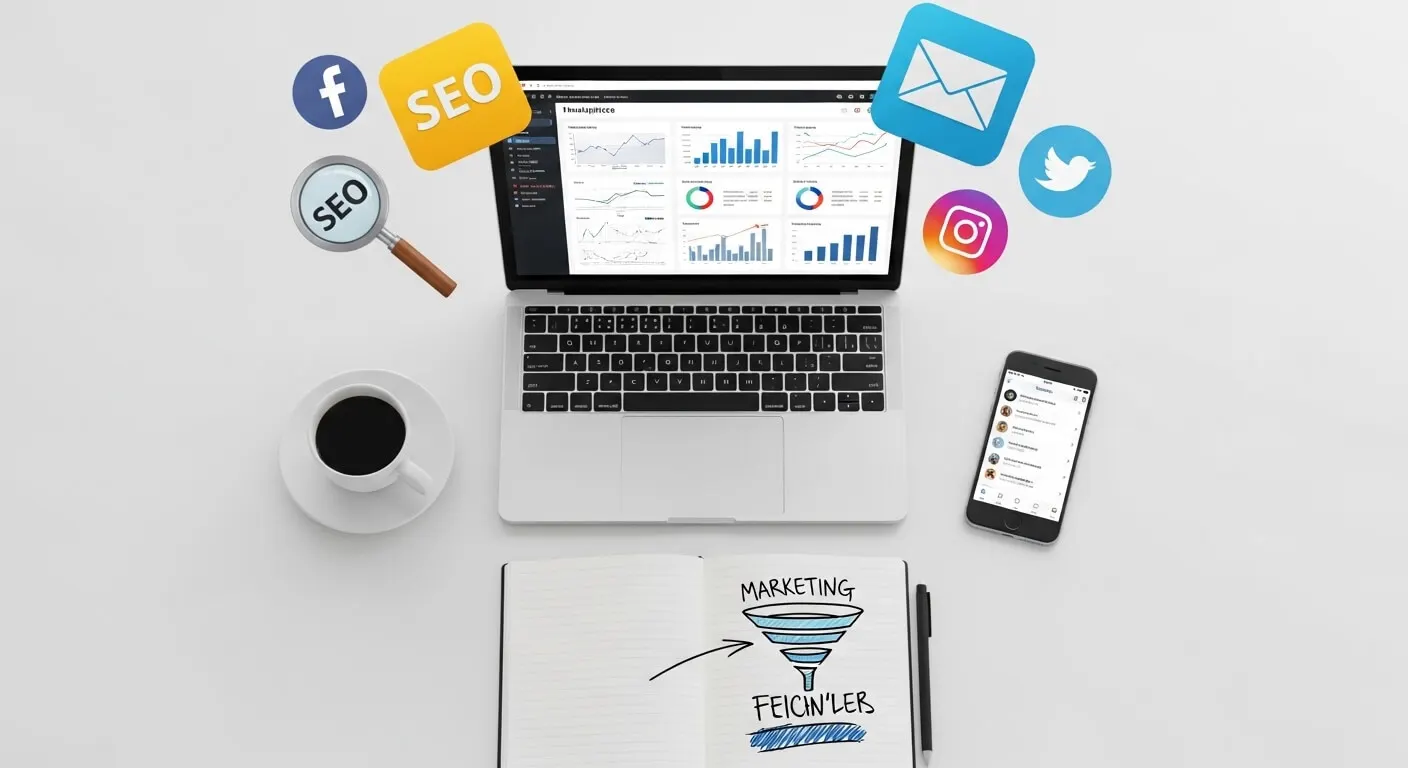
The average small business now uses seven different marketing channels, but most waste money on the wrong ones for their specific situation. Understanding the different types of digital marketing isn’t about learning buzzwords—it’s about knowing which tools actually drive customers for your business type, budget, and timeline.
We’ve managed digital marketing campaigns for businesses across Bangladesh, the US, and UK, from local bakeries to SaaS startups. The pattern is consistent: businesses either spread themselves too thin trying everything, or they stick to one channel that stopped working years ago. This guide breaks down each major type of digital marketing with real costs, realistic timelines, and actual examples from businesses we’ve worked with—not theory from marketing textbooks.
What Is Digital Marketing?
Digital marketing is simply marketing that happens online. Instead of billboards, TV commercials, or print ads, you’re using websites, search engines, social media, email, and other digital channels to reach customers where they already spend time.
The key difference from traditional marketing is measurability. When you run a Facebook ad, you know exactly how many people saw it, clicked it, and bought something. When you publish a blog post, you can track how many visitors it brings months later. This data lets you double down on what works and stop wasting money on what doesn’t.
Digital marketing consists of three core functions:
- Traffic generation: Getting people to your website or profile
- Conversion: Turning visitors into leads or customers
- Retention: Keeping customers coming back
Most businesses focus only on traffic and wonder why they’re not growing. The most successful ones build systems for all three.
The 11 Types of Digital Marketing Explained
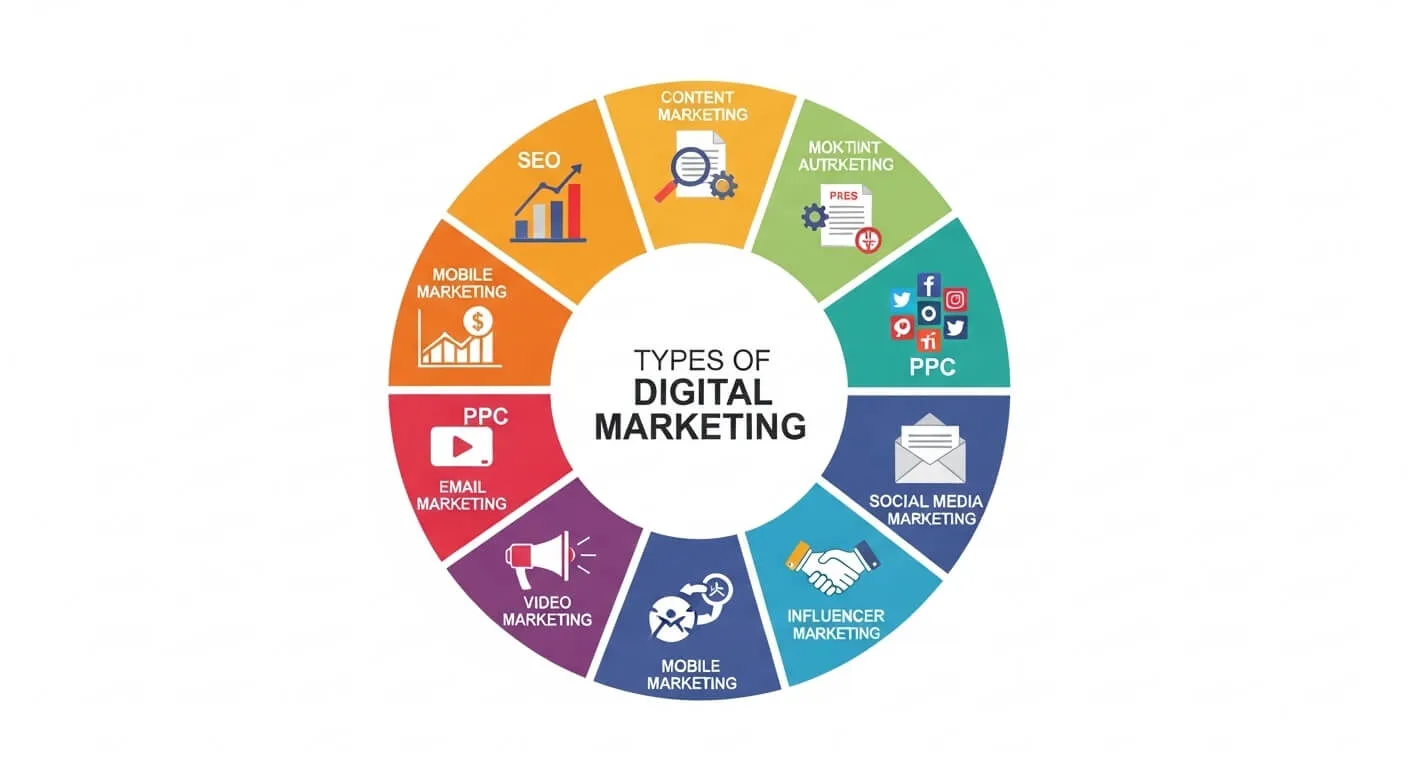
Not all digital marketing types work for every business. A local restaurant needs different channels than an online software company. Here’s a practical breakdown of each type, including when to use it and what it actually costs.
1. Search Engine Optimization (SEO)
SEO is the practice of optimizing your website to rank higher in Google search results for terms your customers are searching for. When someone searches “best plumber near me” or “how to start a bakery,” SEO determines whether they find your business or your competitor’s.
How it works: Google uses complex algorithms to determine which pages best answer a search query. SEO involves optimizing your content, website structure, and earning links from other sites to signal authority. Unlike ads, you don’t pay Google for clicks—you earn them by providing the best answer.
Pros: Free traffic once ranked, high-intent visitors (they’re actively searching), compounds over time, builds credibility
Cons: Takes 3-6 months to see results, highly competitive for popular terms, Google updates can affect rankings
Best for: Local businesses, e-commerce stores, businesses with educational content, any company playing the long game
Real Example: A bakery in Chittagong optimized their Google Business Profile and created pages for “birthday cakes Chittagong” and “custom cakes near me.” Within five months, they ranked in the top three results and now receive 35-40 orders monthly directly from Google searches, with zero ad spend.
Cost: $0 if you do it yourself (just time), $500-$2,000/month for an agency, $100-$300 per quality article if outsourcing content
Timeline: 3-6 months for initial results, 12+ months for competitive terms
Quick Win: Claim and fully optimize your Google Business Profile. Add photos, services, hours, and respond to every review. This alone can drive significant local traffic within weeks.
For comprehensive SEO implementation, many businesses work with specialists who understand technical optimization and content strategy. Our SEO services focus on sustainable rankings rather than quick tricks that get penalized.
2. Content Marketing
Content marketing means creating valuable content—blog posts, videos, guides, podcasts—that helps your target audience solve problems. Instead of directly selling, you build trust by being helpful. When they’re ready to buy, they choose you because you’ve already demonstrated expertise.
How it works: You identify questions your customers ask, create thorough content answering those questions, optimize it for search, and distribute it where your audience spends time. Good content continues working for years after publication.
Pros: Builds authority and trust, supports SEO efforts, evergreen assets, relatively low cost
Cons: Time-intensive to create quality content, slow to show ROI, requires consistency
Best for: B2B companies, businesses with complex products, educators, consultants, anyone selling expertise
Real Example: A web design agency published 25 detailed guides answering common client questions like “how much does a website cost” and “WordPress vs Shopify.” After eight months, these articles generated 12-15 qualified leads monthly, accounting for 60% of new business.
Cost: $100-$500 per quality blog post, $500-$2,000 per video, $0 if you create it yourself
Timeline: 6-12 months to build momentum, but individual pieces can rank within 2-3 months
Quick Win: Turn one detailed blog post into five social media posts, one email newsletter, and one short video. This maximizes your content investment.
3. Social Media Marketing
Social media marketing uses platforms like Facebook, Instagram, LinkedIn, and TikTok to build community, share content, and drive sales. It includes both organic posting (free) and paid advertising.
How it works: You create a business profile, post content regularly, engage with followers, and optionally run targeted ads. Each platform has different strengths—LinkedIn for B2B, Instagram for visual products, Facebook for community building, TikTok for reaching younger audiences.
Pros: Direct customer relationships, community building, relatively low cost to start, excellent for brand awareness
Cons: Algorithm changes affect reach, time-consuming to do well, requires consistent posting, organic reach has declined
Best for: B2C businesses, visual products (fashion, food, design), local businesses, brands targeting under-50 demographics
Real Example: A handmade jewelry business focused on Instagram Reels showing the creation process. Posting three times weekly, they grew from 200 to 12,000 followers in 10 months, with Instagram driving $4,000-$5,000 in monthly sales directly through DMs and link clicks.
Cost: $0 for organic (just time), $5-$20/day for ads to start, $500-$2,000/month for management
Timeline: 1-3 months to build initial following, 6+ months for significant traction
Quick Win: Post behind-the-scenes content. It consistently outperforms polished promotional posts and takes less time to create.
For businesses struggling with organic reach, our guide on Facebook marketing for small business covers strategies that work without large ad budgets.
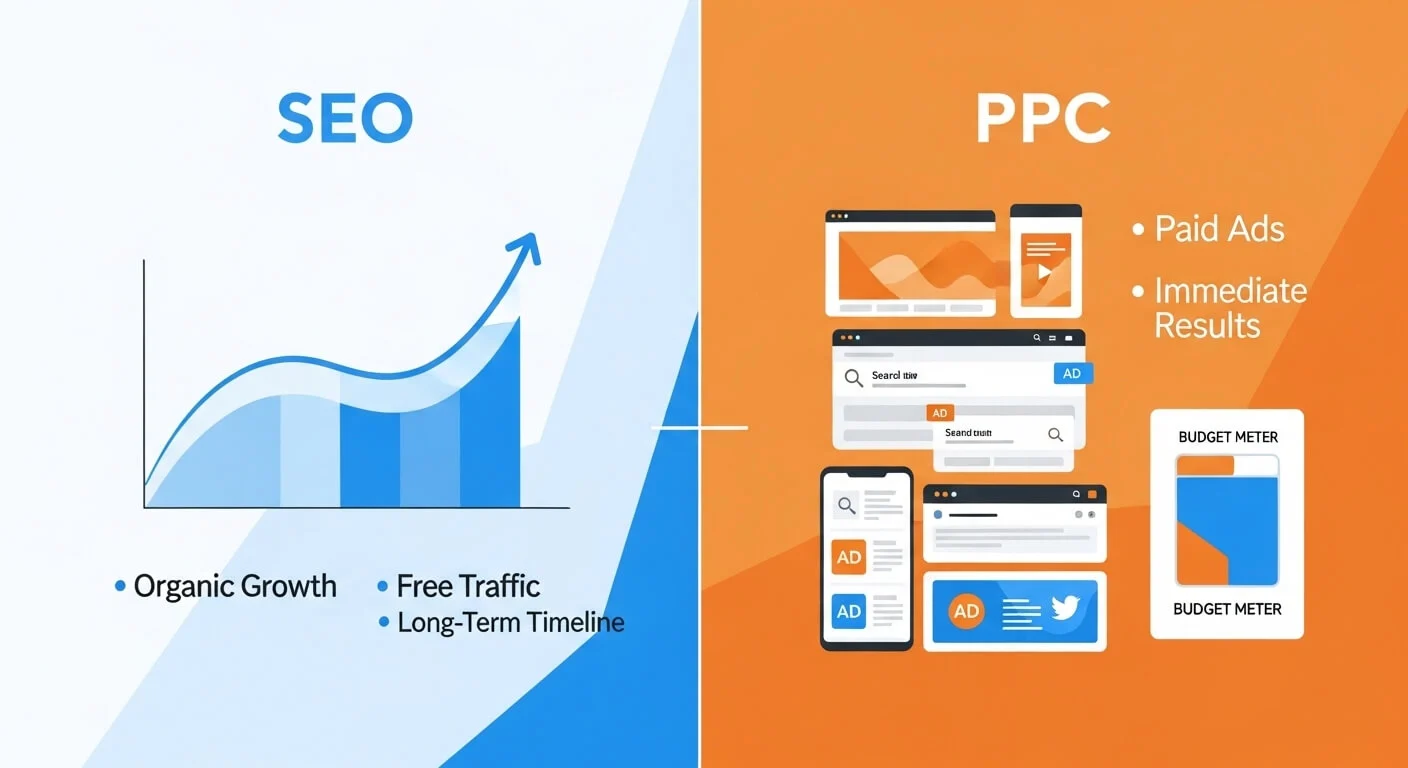
4. Pay-Per-Click Advertising (PPC)
PPC means paying for ads that appear in search results or social media feeds. You pay each time someone clicks your ad. The two main types are search ads (Google) and social ads (Facebook, Instagram, LinkedIn).
How it works: You bid on keywords or audience characteristics. When someone searches that term or matches your audience, your ad enters an auction. The winner’s ad displays, and you pay when clicked. Good PPC requires constant optimization—adjusting bids, testing ad copy, refining targeting.
Pros: Immediate traffic, precise targeting, fully scalable, excellent tracking, works while SEO builds
Cons: Can be expensive ($1-$50+ per click depending on industry), stops working the moment you stop paying, requires expertise to avoid wasting money, competitive
Best for: E-commerce, lead generation, businesses with immediate offers, time-sensitive promotions, competitive markets where SEO is slow
Real Example: An online electronics store spent $800 on Google Shopping ads targeting specific product searches. The campaign generated $6,200 in sales within 30 days—a 7.75x return on ad spend. They reinvested profits to scale to $3,000/month ad spend.
Cost: $500-$5,000/month typical for small businesses, plus 10-20% management fee if using agency
Timeline: Immediate traffic, 2-4 weeks to optimize for profitability
Quick Win: Start with retargeting ads showing to people who visited your website but didn’t buy. These convert 3-5x better than cold traffic and cost less.
5. Email Marketing
Email marketing involves sending targeted messages to people who’ve given you their email address. Despite being one of the oldest digital channels, it consistently delivers the highest return on investment.
How it works: You build an email list through website signups, purchases, or lead magnets. Then you send newsletters, promotional offers, automated sequences, and personalized messages. Modern email platforms allow segmentation—sending different messages to different subscriber groups based on behavior.
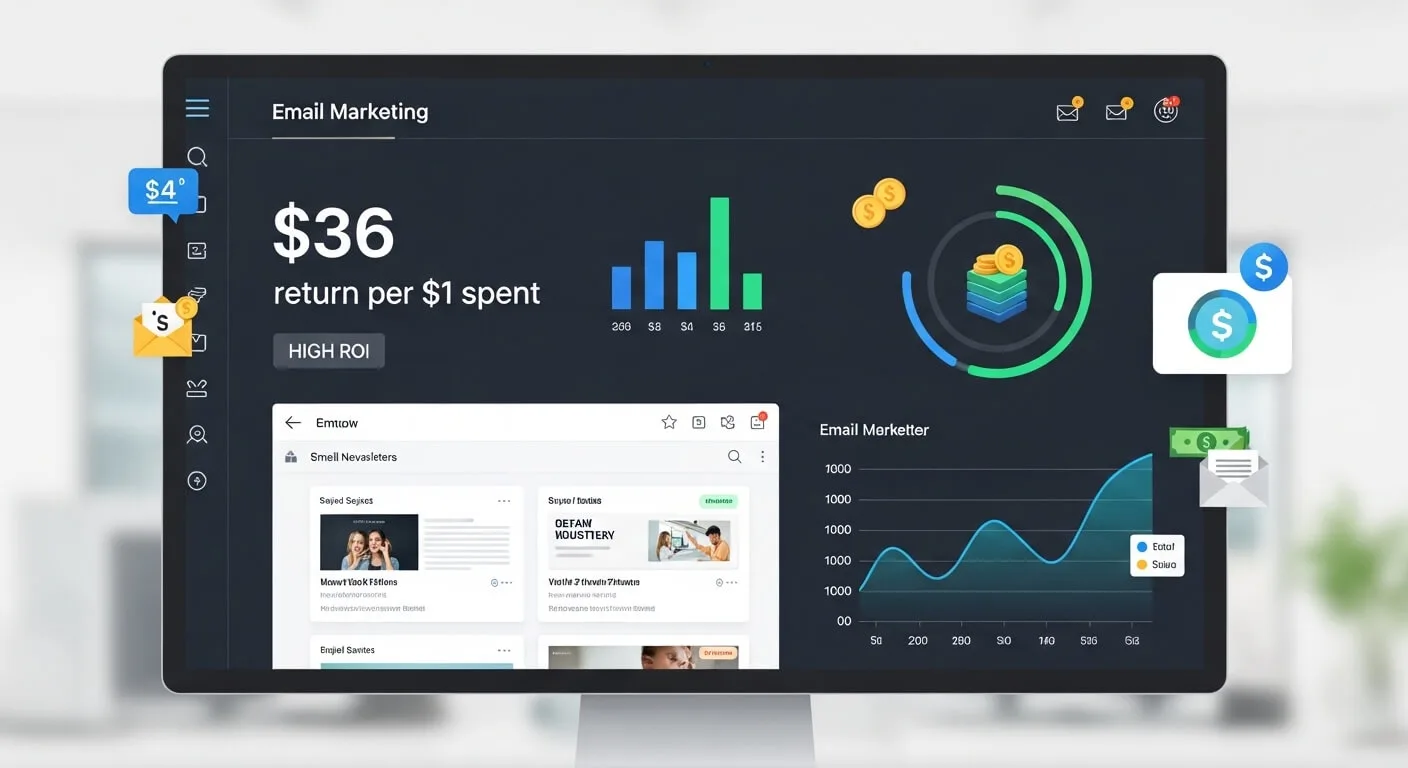
Pros: Highest ROI of any channel ($36 return per $1 spent on average), you own the list (not subject to algorithm changes), highly personalizable, excellent for retention
Cons: Building a quality list takes time, deliverability challenges (spam filters), requires consistent content, list decay (people unsubscribe or go inactive)
Best for: E-commerce (abandoned carts, repeat purchases), content creators, SaaS companies, any business with repeat customers
Real Example: An online course creator built an email list to 3,500 subscribers through a free mini-course. Weekly newsletters with valuable tips generated $8,000-$12,000 in course sales monthly, accounting for 70% of total revenue. The list cost $49/month to maintain.
Cost: $0-$29/month for up to 1,000 subscribers (Mailchimp, ConvertKit), $50-$200/month for larger lists
Timeline: 1-2 months to build initial list, 3-6 months to see significant revenue
Quick Win: Set up an automated welcome sequence for new subscribers—three emails over one week introducing your business and offering value. This alone can double your conversion rate.
6. Affiliate Marketing
Affiliate marketing means partnering with other people or businesses who promote your products for a commission on sales they generate. You can also be the affiliate, promoting others’ products for commission.
How it works: You provide affiliates with unique tracking links. When someone clicks their link and buys, the affiliate earns a percentage (typically 5-30%). You only pay when sales happen, making it low-risk.
Pros: Performance-based (pay only for results), expands reach through partners, low upfront cost, scalable
Cons: Less control over messaging, commission reduces margins, requires affiliate management, can attract low-quality promoters
Best for: E-commerce stores, digital products, courses, businesses with healthy margins
Real Example: A WordPress theme shop offered 30% commission to bloggers and YouTubers who reviewed their themes. Within six months, 45 affiliates drove 22% of total sales, with the company paying $0 upfront—only commissions on completed sales.
Cost: Free to set up, you pay commissions only on sales (typically 10-30%)
Timeline: 3-6 months to recruit affiliates and see traction
Quick Win: Start by reaching out to 10 micro-influencers or bloggers in your niche with engaged audiences. Offer free product plus commission.
7. Influencer Marketing
Influencer marketing involves partnering with people who have engaged audiences on social media. Unlike celebrity endorsements, modern influencer marketing often works best with micro-influencers (1,000-50,000 followers) who have highly engaged niche audiences.
How it works: You identify influencers whose audience matches your target customers, negotiate a partnership (paid post, free product, affiliate commission), and they create authentic content featuring your product. Their followers trust their recommendations.
Pros: Built-in trust transfer, highly targeted reach, content creation included, can be cost-effective with micro-influencers
Cons: Fake followers and engagement are common, hard to measure direct ROI, expensive for large influencers, requires vetting
Best for: Beauty, fashion, food, fitness, lifestyle products, anything visually appealing
Real Example: A skincare brand partnered with 12 micro-influencers (5K-15K followers each) in the beauty niche, sending free products worth $30 each. Total investment: $360 in product. The campaign generated 87 sales totaling $2,600 in revenue within three weeks.
Cost: $50-$500 per post for micro-influencers, $1,000-$10,000+ for larger accounts, or product-only partnerships
Timeline: Immediate exposure, 1-2 weeks for content creation and posting
Quick Win: Search Instagram for hashtags in your niche, find accounts with 3K-15K followers and 3%+ engagement rate, DM them offering free product for honest review.
8. Video Marketing
Video marketing uses video content to promote your business across YouTube, social media, your website, and ads. Video consistently outperforms other content types for engagement and conversion.
How it works: You create videos that educate, entertain, or demonstrate your product. These can be short-form (TikTok, Reels, Shorts) for discovery or long-form (YouTube) for depth. Videos can be organic content or paid ads.
Pros: Highest engagement rates, builds trust faster than text, versatile (tutorials, testimonials, behind-scenes), works across platforms
Cons: Time-consuming to produce, requires comfort on camera (or budget for creators), editing learning curve, equipment costs can add up
Best for: Tutorials and how-tos, product demonstrations, personal brands, businesses with visual processes, education
Real Example: A software company created weekly 5-minute tutorial videos answering common customer questions. Posted to YouTube and embedded in help docs, these videos reduced support tickets by 35% and the YouTube channel now drives 200+ free trial signups monthly.
Cost: $0 using smartphone, $200-$500 for basic microphone and lighting, $1,000-$5,000 for professional setup
Timeline: 3-6 months to build audience, but individual videos can drive traffic immediately
Quick Win: Record your screen while answering a common customer question. Upload to YouTube with a clear title. This one video can help customers for years.
9. Mobile Marketing
Mobile marketing targets users on smartphones through SMS, mobile apps, push notifications, and mobile-optimized ads. With over 60% of web traffic now mobile, this is increasingly important.
How it works: SMS marketing sends text messages to opted-in customers. Push notifications reach app users. Mobile ads appear in apps and mobile websites. The key is brevity and timing—mobile users want quick, relevant information.
Pros: Extremely high open rates (98% for SMS vs 20% for email), immediate delivery, location-based targeting possible, less crowded than email
Cons: Can feel intrusive if overused, character limits, requires explicit opt-in, easy to annoy customers
Best for: Local businesses, restaurants (reservations, specials), appointment-based businesses (reminders), e-commerce (shipping updates, flash sales)
Real Example: A dental clinic implemented SMS appointment reminders 24 hours before visits. No-show rates dropped from 18% to 7%, saving approximately $2,400 monthly in lost revenue. Cost: $29/month for SMS platform.
Cost: $0.01-$0.05 per SMS, $20-$100/month for platforms, app development $5,000-$50,000+
Timeline: Immediate once set up
Quick Win: Collect phone numbers at checkout with opt-in for order updates, then send shipping notifications via SMS. Customers appreciate the transparency.
10. Marketing Automation
Marketing automation uses software to automate repetitive marketing tasks—email sequences, social media posting, lead nurturing, customer follow-up. It ensures consistent communication without manual effort.
How it works: You set up workflows triggered by customer actions. For example: when someone abandons a cart, they automatically receive three emails over three days. When someone downloads a guide, they enter a nurture sequence. When a customer hasn’t purchased in 60 days, they get a win-back offer.
Pros: Saves significant time, ensures consistent follow-up, personalizes at scale, improves conversion rates, works 24/7
Cons: Setup requires time and strategy, can feel impersonal if over-automated, monthly software costs, learning curve
Best for: E-commerce (abandoned carts, post-purchase), SaaS (onboarding, retention), service businesses (lead nurturing), any business with repeatable processes
Real Example: An online store set up three automated flows: abandoned cart (3 emails), post-purchase follow-up (2 emails), and win-back for inactive customers (2 emails). These automated emails generate $3,200 monthly on autopilot, requiring zero manual work after initial setup.
Cost: $20-$50/month for basic tools (Mailchimp, ConvertKit), $100-$300/month for advanced (ActiveCampaign, Klaviyo)
Timeline: 2-4 weeks to set up initial automations, immediate results once live
Quick Win: Set up one abandoned cart email sent 2 hours after abandonment. This single email typically recovers 5-10% of lost sales.
11. Online PR and Reputation Management
Online PR involves managing your business’s reputation and visibility across review sites, forums, news mentions, and social media. It’s about what others say about you online.
How it works: You actively monitor mentions of your brand, encourage satisfied customers to leave reviews, respond to all reviews (positive and negative), seek press coverage, and participate in relevant online communities. Good reputation management improves both trust and SEO.
Pros: Builds credibility and trust, improves local SEO rankings, provides social proof, free (mostly)
Cons: Time-consuming, can’t fully control narrative, negative reviews happen, slow to build
Best for: All businesses, especially local services, restaurants, healthcare, any business where trust is critical
Real Example: A home services company implemented a system asking every satisfied customer for a Google review. Growing from 12 to 87 reviews over eight months (4.8-star average), their Google Maps ranking improved from position 8 to position 2, increasing calls by 43%.
Cost: Free to do manually, $50-$300/month for reputation management tools
Timeline: 3-6 months to build substantial review base
Quick Win: Respond to every review within 24 hours—thank positive reviewers, address negative reviews professionally. This shows prospects you care.
Comparison: Which Types Should You Choose?
| Type | Cost | Speed | Best For |
|---|---|---|---|
| SEO | Low | Slow (3-6 mo) | Long-term growth |
| Content Marketing | Low-Med | Slow (6-12 mo) | Authority building |
| Social Media (Organic) | Low | Medium (1-3 mo) | Community building |
| PPC Advertising | High | Fast (immediate) | Quick sales |
| Email Marketing | Low | Medium (1-2 mo) | Customer retention |
| Video Marketing | Low-Med | Medium (3-6 mo) | Engagement, tutorials |
How to Choose the Right Mix for Your Business
Most businesses fail at digital marketing by trying to do everything or choosing channels based on what’s trendy rather than what fits their situation. Use this framework instead.
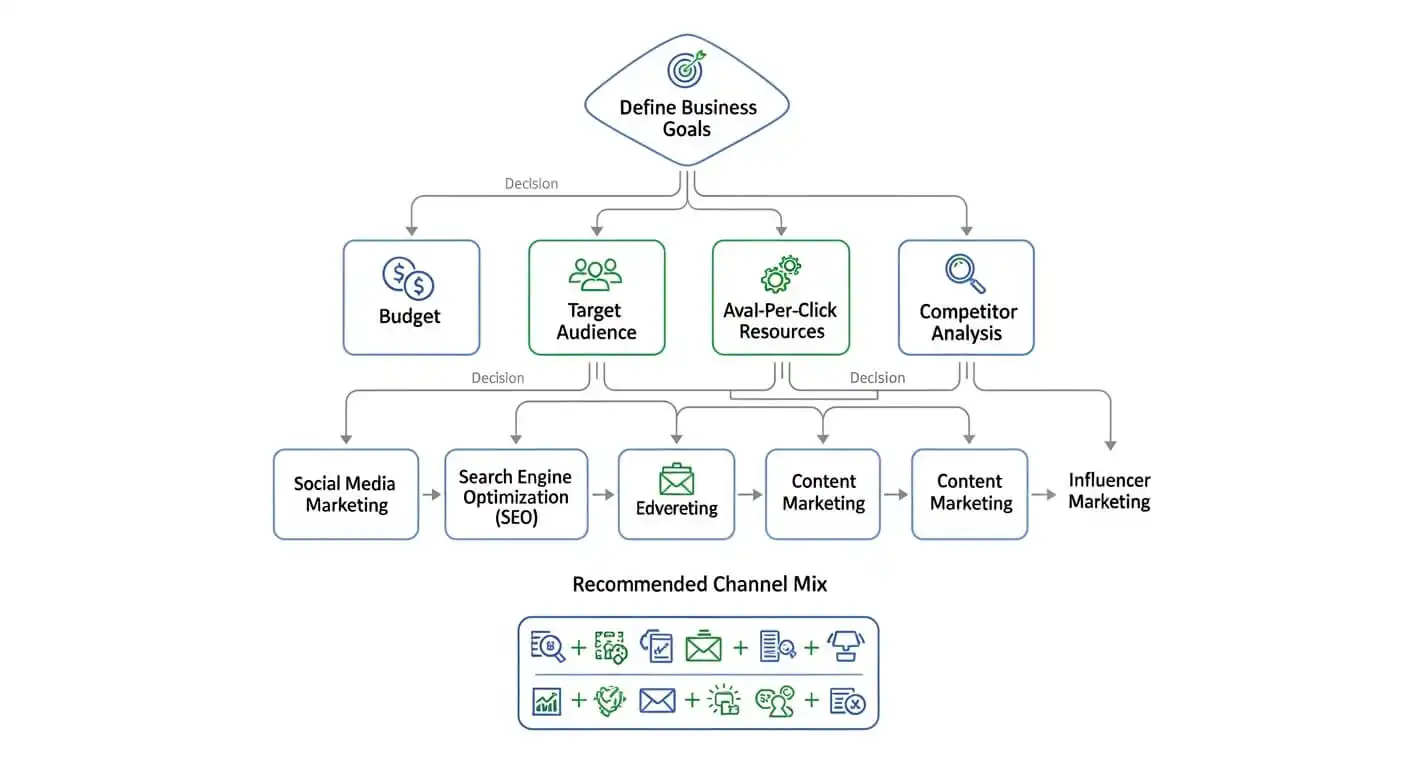
Step 1: Define your primary goal. Are you trying to build brand awareness, generate leads, or drive immediate sales? Brand awareness favors social media and content. Lead generation works well with SEO and PPC. Immediate sales need PPC and email to existing lists.
Step 2: Assess your budget realistically. With $0-$500 monthly, focus on SEO, organic social media, and email marketing. These require time but minimal cash. With $500-$2,000, add content creation and modest PPC. With $2,000+, you can run a full multi-channel approach with paid ads and automation.
Step 3: Understand where your audience spends time. B2B buyers are on LinkedIn and Google. Consumers under 30 are on TikTok and Instagram. Local service customers search Google and check reviews. Don’t waste time on platforms your customers don’t use.
Step 4: Evaluate your resources. Do you have more time than money? Focus on organic channels like SEO and social media. More money than time? Invest in PPC and hire content creators. Have neither? Start with one channel and do it well before expanding.
The Starter Framework (for most small businesses):
- Months 1-3: Set up SEO foundation (Google Business Profile, basic on-page), choose one social platform and post 3x weekly, start building email list
- Months 4-6: Add content marketing (one quality article bi-weekly), launch basic PPC retargeting ($5/day), implement one email automation
- Months 7-12: Scale what works, add second social platform or video, increase PPC budget on profitable campaigns, implement marketing automation
This phased approach prevents overwhelm and lets you measure what actually drives results for your specific business before investing heavily.
Common Mistakes to Avoid
After managing campaigns for dozens of businesses, we see the same mistakes repeatedly. Avoid these to save months of frustration and wasted budget.
1. Trying to be everywhere at once. It’s better to dominate one channel than to be mediocre on five. Master one platform before adding another.
2. Ignoring analytics. If you’re not tracking which channels drive customers, you’re guessing. Set up basic tracking in Google Analytics and check it monthly.
3. Copying competitors blindly. Just because your competitor runs TikTok ads doesn’t mean you should. Their audience, budget, and goals may differ completely.
4. Focusing on vanity metrics. Followers and likes feel good but don’t pay bills. Track metrics that correlate with revenue: leads, sales, email signups, and customer acquisition cost.
5. Giving up too early. SEO takes 3-6 months. Content marketing takes 6-12 months. Most businesses quit at month two, right before results start showing.
6. No clear funnel. Getting traffic is useless if you don’t have a way to capture leads and convert them. Every marketing channel should lead to an email signup, consultation booking, or purchase.
Getting Started: Your First 30 Days
Rather than overwhelming you with everything at once, here’s a practical 30-day plan to implement the most important foundations.
Week 1: Foundation
- Set up Google Analytics and Google Search Console
- Claim and optimize Google Business Profile
- Choose one primary social platform and complete your profile
- Install Facebook Pixel on your website
- Set up basic email capture (popup or form)
Week 2: Content Creation
- Write and publish one helpful article answering a common customer question
- Create 5 social media posts (mix of educational, behind-scenes, and promotional)
- Set up welcome email sequence (3 emails)
- Take photos/videos of your product/service for future content
Week 3: Launch and Promote
- Publish your article and share across social platforms
- Post your 5 social media posts throughout the week
- Send first email newsletter to your list (even if small)
- Ask 3 satisfied customers for Google reviews
- Set up one simple retargeting ad ($5/day budget)
Week 4: Analyze and Adjust
- Review Google Analytics: Where did traffic come from? What pages performed best?
- Check social media insights: Which posts got most engagement?
- Review email open rates and clicks
- Identify one thing to double down on next month
- Identify one thing to stop doing
This focused approach builds momentum without burnout. Most businesses that follow this plan see measurable improvement in traffic and engagement within 30 days, with compounding results over the following months.
Frequently Asked Questions
What is the most effective type of digital marketing?
There is no single “best” type—it depends on your business goals, budget, and timeline. For long-term sustainable growth, SEO combined with content marketing typically delivers the highest ROI. For immediate results, PPC advertising works fastest. For customer retention, email marketing is unmatched. The most effective approach for most businesses is combining 2-3 complementary types rather than relying on one.
Which digital marketing type is best for small businesses with limited budgets?
Start with SEO (optimizing your Google Business Profile is free), organic social media on one platform where your customers are active, and email marketing to capture and nurture leads. These three require primarily time rather than money. As you generate revenue, reinvest 10-15% into PPC advertising to accelerate growth. This phased approach lets you build a foundation before spending significantly on ads.
How many types of digital marketing should I use at once?
Start with 2-3 types maximum. Most small businesses fail by trying to do everything simultaneously and doing nothing well. Master SEO and one social platform first. Once those are generating consistent results and you have systems in place, add email marketing. After 6 months of consistent execution, consider adding PPC or content marketing. Quality and consistency beat quantity every time.
What is the cheapest type of digital marketing?
Organic social media and SEO have the lowest direct costs—you’re primarily investing time. Email marketing is also very affordable at $0-$29 monthly for most small lists. However, “cheapest” doesn’t mean “best.” A channel that costs $500/month but generates $5,000 in revenue is cheaper than a free channel that generates nothing. Focus on return on investment, not just upfront cost.
How long does digital marketing take to work?
Timelines vary significantly by channel: PPC and social media ads can drive traffic immediately (same day). Social media organic growth typically takes 1-3 months to build momentum. Email marketing shows results in 1-2 months as your list grows. SEO and content marketing require 3-6 months minimum, often 6-12 months for competitive terms. The key is matching your expectations to the channel and maintaining consistency during the ramp-up period.
Can I do digital marketing myself or do I need to hire an agency?
Many small business owners successfully handle their own digital marketing, especially in the early stages. The trade-off is time versus money—DIY saves cash but requires 5-10 hours weekly to do well. Consider hiring help when: you’re too busy to be consistent, you’ve plateaued and need expertise, you want to scale faster, or you need specialized skills like PPC management or technical SEO. Many businesses start DIY and hire specialists for specific channels as they grow.
What’s the difference between digital marketing and social media marketing?
Social media marketing is one type of digital marketing. Digital marketing is the umbrella term encompassing all online marketing activities: SEO, email, PPC, content, social media, and more. Social media marketing specifically refers to marketing activities on social platforms like Facebook, Instagram, LinkedIn, and TikTok. Think of digital marketing as the entire toolbox, and social media as one tool in that box.
How much should I budget for digital marketing?
A common guideline is 7-12% of revenue for established businesses, 12-20% for businesses in growth mode. If you’re just starting, budget what you can afford consistently—even $300-$500 monthly can be effective if focused on 1-2 channels. More important than the amount is consistency. Spending $500 monthly for 12 months beats spending $2,000 one month and nothing the next three months. Start small, measure results, and reinvest profits into scaling what works.
Need help choosing the right digital marketing mix for your business?
Our team at Raozan IT helps small businesses implement cost-effective digital strategies that drive real results.
Chat on WhatsApp
Get Free Consultation