Ask a group of Bangladeshi business owners which advertising platform works better and you will get two confident answers that contradict each other. One swears by Facebook ads. The other says Google ads brought all their customers. Both are telling the truth about their own business, and both answers are useless to you unless your business works exactly like theirs.
Facebook ads and Google ads are not really competitors in the way people imagine. They solve different problems. One finds people and shows them something they might want. The other waits for people to say what they want and answers them. Choosing between them without understanding that difference is how budgets get wasted.
This guide compares the two platforms the way they actually work for businesses in Bangladesh: what each one is good at, where each one struggles, what the budget question really looks like, and a simple way to decide where to start. No hype, no guaranteed results, just an honest walkthrough so you can spend your first taka with your eyes open.
The Core Difference: Discovery vs Demand
Everything about these two platforms flows from one difference.
Facebook ads (which now run through Meta Ads Manager and also appear on Instagram and Messenger) are discovery ads. Your ad appears in front of people who were not looking for you. They were scrolling through their feed, watching reels, or chatting with friends. Your ad interrupts that moment with something interesting enough to stop the scroll. The customer mindset is: “I did not know I wanted this, but now I am curious.”
Google ads are mostly demand ads. The biggest part of Google ads is search ads, the small text ads that appear above or below search results. Someone types what they need into Google, and advertisers bid to appear for those words. The customer mindset is: “I have a problem and I am looking for a solution right now.”
This is why the platforms feel so different to run. On Facebook you are building interest in people who may buy later. On Google you are catching people who are already closer to buying. Neither is better on its own. The question is which situation matches your business.
How Facebook Ads Work for a Bangladeshi Business
When people in Bangladesh say “Facebook ads,” they usually mean ads run through Meta’s advertising system, which places ads on Facebook, Instagram, and Messenger. In Bangladesh, this matters more than anywhere else, because Facebook is where a huge part of the country’s online life happens. Shopping, news, entertainment, and business conversations all flow through it.
How the targeting works
Meta lets you choose who sees your ad based on demographics (age, gender, location), interests, behaviors, and connections. You can show ads to people in a specific city or neighborhood, to people interested in topics related to your business, or to people similar to your existing customers. You can also show ads again to people who visited your website or engaged with your Facebook page, which is called retargeting and is one of the most useful features of the platform.
Where Facebook ads shine
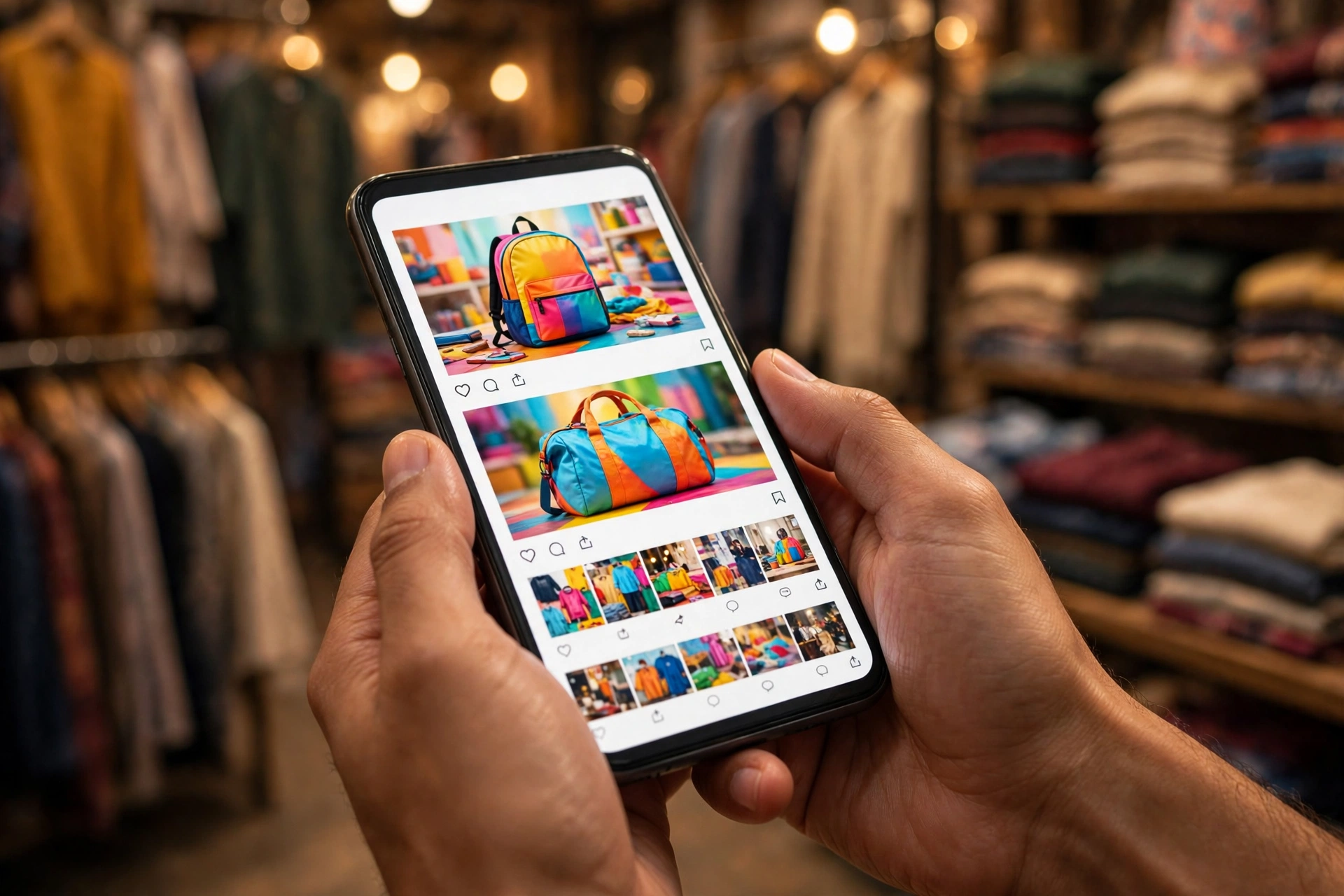
Visual products. If your product looks good in a photo or video, clothing, food, furniture, cosmetics, home decor, Facebook and Instagram are natural homes for it. People buy with their eyes first.
Building demand for something new. If people are not searching for what you sell because they do not know it exists, search ads cannot help you. Discovery ads can introduce it.
Starting with a modest budget. Meta lets you start with a small daily spend and learn from it. That makes it the gentler place to make your beginner mistakes.
Conversations. Many Bangladeshi businesses close sales in Messenger or WhatsApp chats. Meta’s click-to-message ads send people straight into a conversation, which fits how buying actually happens here. Our Facebook marketing guide covers the organic side of this in detail.
Where Facebook ads struggle
The intent is lower. You are showing ads to people who were not shopping. Many will ignore you, and the ones who click often need more follow-up before they buy. Expect to nurture, not just to collect orders.
Creative decides everything. On Facebook, the ad itself does the heavy lifting. Weak photos, dull videos, or unclear offers get ignored no matter how clever your targeting is. You need a steady supply of fresh creative, which is real ongoing work.
Audiences tire. Show the same ad to the same people too long and results fade. You have to watch for this and refresh your ads, or your budget quietly stops working as hard.
Policy restrictions. Meta rejects ads in certain categories and restricts how you can target for things like housing, jobs, and credit. If your business sits in a sensitive category, check the rules before you plan around the platform.
How Google Ads Work for a Bangladeshi Business
Google ads include several campaign types, but for most small businesses the important one is search ads: text ads shown when someone searches for words you chose. When a person in Dhaka types “AC repair service near me” or a buyer searches for “wholesale abaya supplier Bangladesh,” the businesses at the top of the results paid to be there.
How the targeting works
You choose keywords, the words and phrases that trigger your ad. You also choose where your ad shows, which devices, and what times. When someone searches, an auction decides which ads appear, weighing your bid against how relevant and useful Google judges your ad and your landing page to be. This last part matters: Google rewards ads that actually answer the search, so a well-matched ad can win against a higher bidder.
Where Google ads shine
High-intent demand. Someone searching for a service usually wants it soon. A search click is closer to a sale than a scroll-by click, which is why Google leads often convert at a better rate.
Fast feedback. A search campaign can start bringing enquiries the same day it goes live, because the demand is already there. You are not waiting for interest to build.
Local searches. People constantly search for services “near me” or in their area. For workshops, clinics, repair services, restaurants, and any business serving a local area, search ads put you in front of exactly those people.
Measurement. Google’s reporting shows you which keyword, which ad, and which search term produced each enquiry. That level of detail makes it easier to see what is working and fix what is not.
Where Google ads struggle
Clicks often cost more than on Facebook. Because you are bidding against competitors for the same searches, a single click in a competitive niche can cost noticeably more than a Facebook click. The click is warmer, but you pay for that warmth.
The learning curve is steeper. Keywords, match types, negative keywords, bidding strategies, quality scores. There is more to get wrong, and beginners commonly waste budget on irrelevant searches before they learn to control it.
You need a good landing page. A search ad that sends people to a slow or confusing website converts poorly and gets penalized in the auction. If your site is not ready, fix that first. Our web design services exist for exactly this reason.
No existing demand, no results. If nobody searches for what you sell, search ads have nothing to catch. New categories and new brands usually need discovery advertising first.
Head-to-Head Comparison
Here is the honest side-by-side picture.
| Aspect | Facebook Ads | Google Ads (Search) |
|---|---|---|
| What triggers your ad | Who the person is: demographics, interests, behavior | What the person typed: their search keywords |
| Buyer intent | Low to medium; people are browsing, not shopping | High; people are actively looking for a solution |
| Ad formats | Images, video, carousel, stories, reels | Mostly text ads, plus display banners and YouTube video |
| Best for | Visual products, new brands, building awareness, retargeting | Services people search for, urgent needs, local “near me” searches |
| Budget to start learning | Smaller; you can test and learn with a modest daily spend | Needs more room; competitive keywords consume budget faster |
| Learning curve | Moderate; creative and audience testing matter most | Steeper; keyword and bid management take study |
| Speed of first results | Moderate; interest builds over days and weeks | Fast; enquiries can arrive the day you launch |
| Biggest beginner risk | Weak creative and audience fatigue | Irrelevant clicks from poorly chosen keywords |
| Measurement | Good; Meta’s dashboard plus pixel tracking | Excellent; keyword-level detail on what produced each enquiry |

The Budget Question, Answered Honestly
This is the question everyone actually wants answered, and it is the one with no fixed answer. Both platforms run on auctions, so what you pay depends on how many competitors are bidding, how good your ads are, and how well your pages convert. Anyone giving you a fixed cost per click or per lead for your business is guessing.
What can be said honestly is this. Facebook clicks usually cost less per click than Google search clicks in the same market, but a Facebook click and a Google click are not the same thing. The right comparison is never cost per click; it is cost per result. A platform with cheaper clicks but far fewer buyers can easily cost you more per sale than the “expensive” one.
A practical way to think about it: with a small test budget, Facebook is the easier place to start learning, because your money stretches across more impressions and you get data faster. Google search rewards you once you can afford to test enough keywords to find the ones that convert, and to give the campaign time to learn. Both platforms need a learning period. Changing everything every two days, or judging a campaign after a handful of clicks, guarantees you learn nothing.
Whatever you choose, the non-negotiable part is tracking. Install Meta’s pixel and Google’s tracking tag on your website before you spend anything, so every enquiry can be traced back to the ad and keyword that produced it. Without tracking, you are not advertising; you are donating.
Which One Suits Your Business?
Forget the platform debate and match the platform to how your customers buy.
Choose Facebook ads first if: you sell something visual like fashion, food, furniture, or cosmetics; your brand is new and nobody searches for it yet; your customers decide emotionally and buy after seeing something appealing; or you want to build an audience you can sell to repeatedly.
Choose Google ads first if: people already search for what you offer, especially with urgent or specific needs like repairs, rentals, clinics, or professional services; you serve a local area and want “near me” searches; or you need enquiries quickly and have a website ready to receive them.
Consider both from the start if: you run an online store. Discovery ads on Facebook and Instagram find new customers, while Google catches the ones searching for your products by name or category. The two together cover the whole journey from “I did not know this existed” to “I am ready to buy.”
A note on the service page overlap: this decision sits inside a bigger advertising strategy. If you are weighing paid ads against other channels entirely, our paid advertising services page explains how the pieces fit together.
The Combination Most Serious Advertisers End Up With
Here is something the “which is better” debate hides: most experienced advertisers do not pick one. They use both, each doing the job it is good at.
The pattern looks like this. Facebook and Instagram ads create demand: they introduce your product, tell your story, and build an audience of people who now know you exist. Retargeting ads, on both platforms, stay in front of the people who showed interest but did not buy. Google search ads catch the demand when it turns into action: the person who saw your ad last week and today searches for your product by name, or the stranger with the same problem who searches directly.
You do not need a large budget to run this combination. Many small businesses start with one platform, get it producing steadily, and add the second one later. The order matters less than the discipline: one platform working well beats two platforms running badly.
Getting Started Without Wasting Money
Whichever platform you pick, the same fundamentals decide whether your budget works or burns.
Define one goal per campaign. “Get more sales” is not a goal a campaign can optimize for. “Get quote requests from homeowners in Dhaka” is. One campaign, one job.
Fix tracking before you launch. Install the Meta pixel and the Google tag, and test that enquiries are being recorded. This one step separates advertisers who improve from advertisers who guess.
Send clicks somewhere worthy. Your landing page should load fast, match what the ad promised, and make the next step obvious. Sending paid traffic to a weak page is the most common way beginners waste money. If your site needs work first, that is where the budget should go.
Start narrow, then expand. On Facebook, test one or two audiences with a few ad variations. On Google, start with a tight group of closely related keywords and a list of negative keywords to block irrelevant searches. Small and controlled beats big and hopeful.
Give it time to teach you. Both platforms need a learning period to figure out who responds to your ads. Judge performance on enough data, not on the first day’s numbers, and resist the urge to rebuild everything every morning.
Review and prune regularly. On Google, check which search terms triggered your ads and exclude the irrelevant ones. On Facebook, watch for ad fatigue and refresh creative before results fade. Advertising is gardening, not architecture.
Frequently Asked Questions
Can I run both platforms with a small budget?
You can, but starting with both usually means splitting your budget so thin that neither campaign gathers enough data to learn. A calmer approach is to pick the platform that matches your situation, make it work, then add the second one with its own budget.
Which platform is easier for a beginner?
Meta’s Ads Manager feels more visual and forgiving at first, which is why many beginners start there. Google search ads demand more upfront learning about keywords and match types, but their reporting teaches you faster what is actually working. Both platforms offer free official learning resources, and working through those before spending is time well used.
Do I need a website to run Google ads?
For search ads, yes, you need somewhere to send the clicks, and that page needs to match the ad and load properly. A Facebook page alone is a weak destination for search traffic. If your website is not ready, improving it comes before the ad budget. See our web design services for what a ready site looks like.
How long before I see results?
It varies more than anyone likes to admit. Some search campaigns produce enquiries within days; Facebook campaigns often need a few weeks of testing before they settle. What is certain is that anyone promising you instant profit from either platform is selling you something, not advising you.
Should I just boost my Facebook posts instead?
Boosting is a shortcut with limited targeting and almost no testing ability. It is fine for getting a post seen. For actual advertising with a real budget, use Ads Manager, where you can choose precise audiences, test variations, and track results properly.
Can SEO replace paid ads?
They do different jobs. SEO builds free, compounding traffic over months; ads buy immediate visibility starting today. Most growing businesses eventually use both: ads for now, SEO for later. Our SEO services page explains the organic side.
The Short Answer
If your customers search for what you sell, start with Google. If they need to discover it first, start with Facebook. If you are not sure, look at how your last ten customers found you; the answer is usually hiding there. And whichever you choose, track everything, start small, and let the data, not the debate, tell you what to do next.
If you would rather have someone experienced set this up and manage it for you, take a look at our paid advertising services, or browse everything we do on our services page. To talk about your specific situation, reach out on WhatsApp at +8801735127127, send a message through our contact page, or email [email protected]. We will look at your business honestly and tell you which platform deserves your budget first.