Does Your Business Need a Website If You Already Have a Facebook Page?
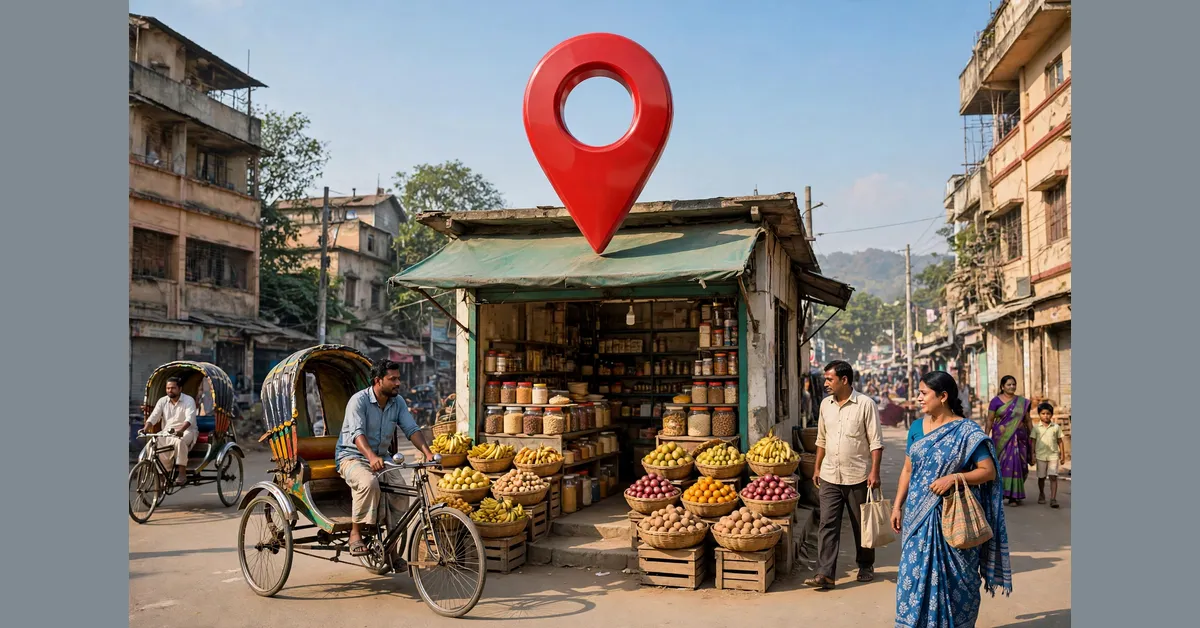
Walk through any busy market in Bangladesh and you will see the same pattern. A clothing boutique in Dhaka takes all its orders through Messenger. A restaurant in Chattogram posts its daily menu on Facebook. A furniture shop in Sylhet answers price questions in the comments. None of them has a website, and business is fine.
So the question is a fair one: if a Facebook page already brings customers, why would a small business spend time and effort on a website? This guide gives you the honest answer, not a sales pitch. We will look at what a Facebook page does well, what it cannot do, and how to decide what is right for your business. If you want help thinking through the decision for your own shop, talk to our team and we will give you a straight answer.
Why so many Bangladeshi businesses run on Facebook alone
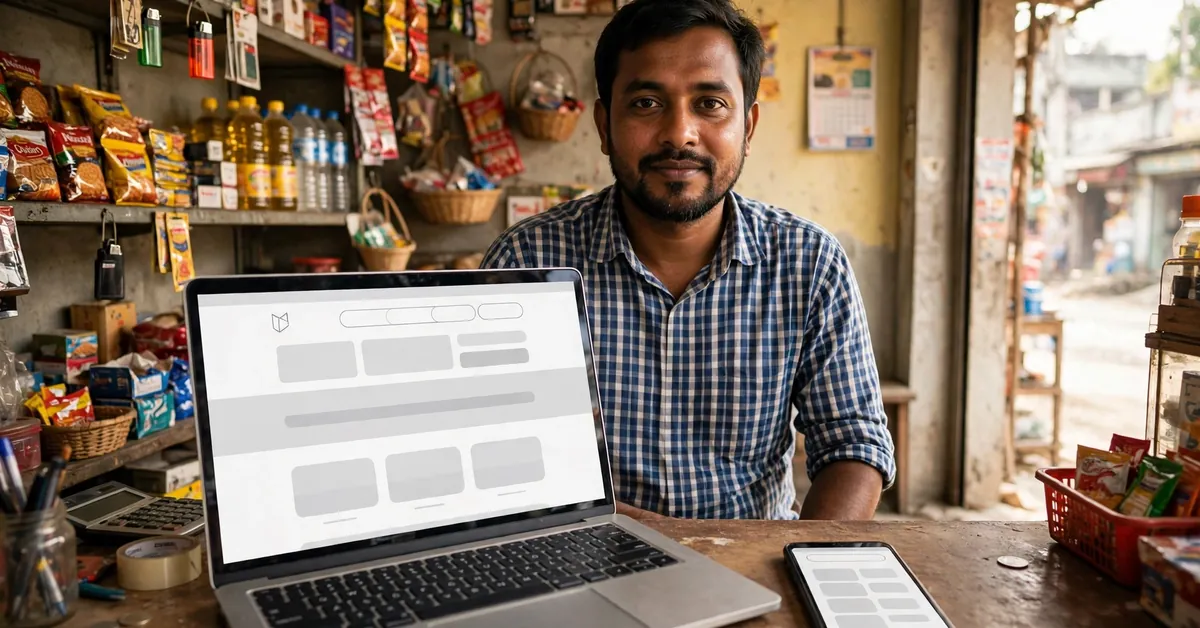
Facebook is where the customers already are. Setting up a business page costs nothing, posting takes seconds, and a shop owner can reply to a customer from a phone while standing behind the counter. For many Bangladeshi sellers, Facebook is the storefront, the catalog, the cashier, and the customer service desk all in one app.
There is nothing wrong with that start. A free page that brings real orders is a good business decision. The problems begin later, when the business grows and the limits of a Facebook-only presence start to show. Most business owners discover these limits one at a time, usually at the worst possible moment.
What a Facebook page genuinely does well
Before we talk about what is missing, let us be fair about what Facebook offers, because some of it is genuinely hard to replace.
It is free and fast. You can create a page in ten minutes and start selling the same day. No setup cost, no learning curve, no waiting.
Your customers are already there. You do not have to convince anyone to visit a new place. They scroll Facebook every day, and your posts can land in front of them where they already spend time.
Talking to customers is easy. Messenger, comments, and reviews keep the conversation close. A customer can ask a question and get an answer in minutes, and that personal contact builds loyalty.
Community builds trust. Reviews, ratings, and check-ins from real customers show new visitors that other people already buy from you. For a new business, that social proof is valuable.
Live selling works. Facebook Live has become a serious sales channel for Bangladeshi boutiques and shops. A website cannot copy that experience, and it does not need to.
If you want to get more out of the page you already have, our Facebook marketing guide for small businesses walks through the practical side. But even a well-run page has limits that no amount of good posting can fix.
The honest answer: it depends on what you want your online presence to do
A Facebook page and a website are not two versions of the same thing. They do different jobs. Facebook is a place to be discovered and to stay in touch. A website is a place to be found, to be trusted, and to turn visitors into customers on your own terms.
Most small businesses eventually need both. But “eventually” is doing a lot of work in that sentence. The real question is whether you have reached the point where a Facebook-only presence is quietly costing you customers. Here is how to tell.
Seven things a website can do that a Facebook page cannot
1. A website is yours. A Facebook page is borrowed space.
This is the biggest difference, and it is worth understanding calmly. Your Facebook page exists inside Facebook’s system. Facebook sets the rules, and it can restrict a page, unpublish it, or limit an account, sometimes after a false report, sometimes by mistake. Appeals exist, but they can take days or weeks, and during that time a business that lives only on Facebook is unreachable.
A website works differently. You own the domain name and the content on it. No platform update can take it down, and no rule change can move your customers somewhere else. Think of it the way you would think about a shop: a Facebook page is like renting a stall in someone else’s market. A website is your own shop with your name on the door. Renting the stall is a fine way to start, but you would not want it to be the only place your business exists.
2. Google can find your website. It mostly cannot find your Facebook page.
When someone searches Google for what you sell, what do they find? Google is very good at reading websites, but a Facebook page gives it little to work with. Pages do sometimes appear in search results, usually when someone searches your business name, which means the searcher already knew about you.
The customers you are missing are the ones who do not know your name yet. They search for things like “boutique in Chattogram” or “best biryani near me” or “web design services in Bangladesh”. A well-built website can show up for those searches. A Facebook page almost never does. This is the core of search engine optimization: making your business findable by people who are looking for what you offer but have never heard of you.
3. A website builds trust before the first call
Put yourself in a customer’s place. You hear about a business from a friend and look it up before calling. One business has only a Facebook page with a few months of posts. Another has a proper website with an About page, clear services, contact details, and answers to common questions. Both might do excellent work, but the website makes the business look established and serious.
This matters even more for bigger decisions. Nobody hires a web designer, a contractor, or a clinic based on a Facebook page alone if a competitor has a professional website. The website does not need to be large. It needs to look like a business that takes itself seriously, because customers read that as a sign you will take them seriously too.
4. You control the path from visitor to customer
On Facebook, every page looks the same. Your business appears inside Facebook’s layout, surrounded by Facebook’s buttons, notifications, and distractions. A visitor who came to check your prices can wander off into their news feed in two taps, and you have no say in it.
A website lets you design the journey. A visitor lands on a page about one service, reads the details, sees the answers to their questions, and finds a clear next step: a WhatsApp button, a contact form, a phone number. There are no competing notifications. The whole page exists to do one job, which is to turn an interested visitor into a customer.
5. Your key information never gets buried
Your address, phone number, opening hours, and price list are the most useful things a customer can find about your business. On Facebook, this information sits in a sidebar that many visitors never open, or it appears in a post from three months ago that nobody can find again.
On a website, the important information is always in the same place. A customer who needs your phone number at midnight finds it in seconds. A customer who wants to know whether you deliver to their area checks one page. Nothing depends on the customer scrolling far enough or asking in the comments.
6. What you publish on a website keeps working
A Facebook post has a short life. It shows up in feeds for a day or two, then sinks under newer posts, and after a few weeks it is effectively invisible. The helpful post you wrote in January is gone by March.
Pages on a website do not expire that way. An article that answers a common customer question can keep bringing visitors from Google for years. A service page you wrote once keeps explaining your work to every new visitor. The effort you put into a website compounds over time. The effort you put into Facebook posts starts over every week.
7. Your audience list belongs to you
Followers are not customers you can reach whenever you want. How many of your page followers see a given post is decided by Facebook’s system, which has been showing business posts to a smaller and smaller share of followers for years. You can pay to reach more of them, which means you are renting access to an audience you built.
A website lets you build a list you actually own: email subscribers, WhatsApp contacts collected with permission, or simply a steady stream of visitors who arrive through Google without anyone’s permission. If a platform changes its rules tomorrow, that list still works. That is the difference between an asset and a rental.
What Facebook is genuinely better at
This is not a one-sided story. There are things a website does poorly and Facebook does well, and a smart business uses each for what it is good at.
Facebook wins at conversation. Quick questions, live videos, community posts, and the back-and-forth of comments are natural there. A website is a poor place for casual chat.
Facebook wins at discovery by people who are not searching. Nobody searches Google for “interesting boutique I have never heard of”, but a well-shared post or a live session can put your shop in front of thousands of people who were not looking for anything. That kind of accidental discovery is Facebook’s superpower.
Facebook wins at speed. A flash sale, a new arrival, a change in opening hours for a holiday: you can announce it in a minute and your followers see it today. Updating a website takes longer and reaches fewer people in the short term.
The pattern that works is simple: Facebook brings people in, and the website turns them into customers. Your Facebook page stays active and lively. Your website sits at the center, holding the information, the trust, and the contact details that close the sale.
A website does not have to be big
One reason many small business owners avoid websites is that they picture something huge and expensive: dozens of pages, a shopping cart, a blog updated weekly. Most small businesses need nothing like that.
A starter website for a small business is usually four or five pages: a homepage that says what you do and who you serve, an about page that tells your story, a services or products page, and a contact page with your phone number, WhatsApp button, address, and a simple form. That is enough to be found on Google, to look professional, and to give customers everything they need.
You can keep running your day-to-day business on Facebook exactly as before. The website is not a replacement for your page. It is the foundation underneath it. And when you are ready, you can add more: an online catalog, a booking form, articles that answer customer questions. A good web design service for Bangladeshi businesses will build you a site that can start small and grow with you, instead of something you have to rebuild in two years.
What your first website should include
If you decide to get a website, these are the pieces that matter most for a small business. Everything else is optional.
Clear contact details on every page. Your phone number, a WhatsApp button, and your address should never be more than one tap away. Most customers visit a small business website for exactly this information.
A plain-language description of what you do. Write it the way you would explain it to a customer standing in your shop. Avoid jargon and grand claims. Say who you serve and what happens when someone contacts you.
Real photos. Photos of your shop, your products, your team, or your work do more for trust than any paragraph of text. Phone photos are fine if they are clear and honest.
Answers to the questions you hear every day. If every customer asks about delivery areas, timing, or how to order, put those answers on the website. Every question the website answers is a message you do not have to reply to.
A link to your Facebook page, and a link back. The two should point at each other. Your website links to your Facebook page for daily updates and conversation, and your Facebook page’s main button and About section link to your website. Visitors can choose whichever suits them.
Moving from Facebook-only to website-plus-Facebook, step by step

You do not need to change everything at once. Here is a calm order of operations that keeps your current orders flowing while you build the new foundation.
Step 1: Get the website built. Start with the small version described above. While it is being built, keep posting and selling on Facebook exactly as usual. Nothing about your daily routine changes.
Step 2: Connect the two. Put your website link in your Facebook page’s main button, About section, and pinned post. Put your Facebook page link on your website. Now each channel feeds the other.
Step 3: Move your key information over. Make sure everything a customer might need, address, hours, phone, delivery areas, ordering steps, exists on the website. Then start answering repeat questions with a link to the right page instead of typing the same reply for the fiftieth time.
Step 4: Let Google start finding you. This part takes patience. A new website does not rank on day one. But every month it exists, with real information about a real business, it becomes easier to find. Meanwhile your Facebook page keeps bringing the customers you already have.
If you would like someone to handle the whole thing, from the first draft to the finished site, take a look at our services or send us a message. We build websites for Bangladeshi businesses every week, and we will tell you honestly whether you need one yet.
Frequently asked questions
I get all my orders through Facebook. Why change what works?
You do not need to change what works. A website is not a replacement for your Facebook orders; it is protection for them. Right now every order depends on one platform working normally. A website adds a second channel that you control, catches the customers who search Google instead of Facebook, and gives your business a professional home base. Keep doing what works, and add the safety net underneath it.
Do I need a website if I have Instagram too?
The same logic applies. Instagram is owned by the same company as Facebook, so you face the same limits: you do not own the account, you cannot control how it ranks on Google, and the audience is rented, not owned. Instagram is excellent for showing your products visually. It still cannot do the job of a website.
Will a website help customers find me on Google?
Yes, that is one of its main jobs. A Facebook page rarely shows up when someone searches for a product or service without knowing your business name. A website with clear pages about what you offer can appear in those searches and bring you customers who never would have found your Facebook page.
My business is very small. Is a website overkill?
Not if the website is sized to the business. A one-person tailoring shop does not need an online store with a hundred products. It needs a few pages: what you make, where you are, how to contact you, and some photos of your work. That small site still does the three essential jobs: it can be found on Google, it builds trust, and it holds your contact details where customers can always reach them.
Can I keep my Facebook page after getting a website?
Absolutely, and you should. The best setup is both: an active Facebook page for daily updates, conversation, and live selling, and a website as the stable center that holds your information and turns visitors into customers. Link them to each other and let each do what it does best.
The bottom line
A Facebook page is a great place to start and a good channel to keep. It is free, your customers are there, and it handles conversation better than anything else. But it is borrowed space: you do not own it, Google barely sees it, and the audience you built can only be reached on Facebook’s terms.
A website is the part of your online presence that belongs to you. It gets found on Google, it builds trust with strangers, it holds your key information where it can never get buried, and it keeps working for years. For most Bangladeshi small businesses, the right answer is not Facebook or a website. It is a website at the center, with Facebook as the lively channel around it.
If you are ready to give your business that foundation, see our web design services for Bangladeshi businesses, or reach out directly: message us on WhatsApp at +8801735127127, use the contact page, or email [email protected]. We will give you an honest opinion about what your business actually needs.